Toprock Is Transforming Brooklyn’s Dance Scene
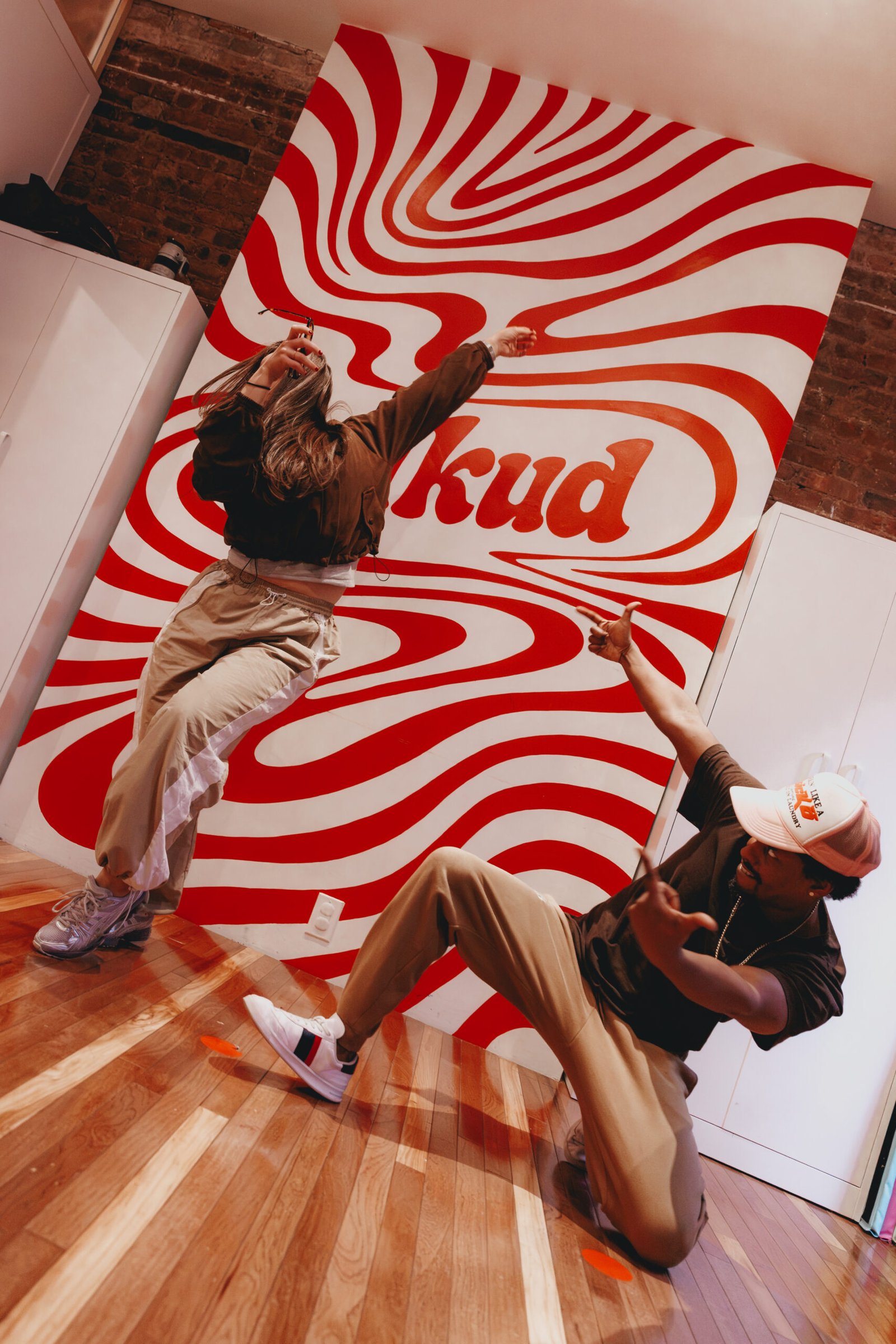
Toprock introduces a nimble, artist-centered approach to philanthropy, investing directly in the people, practices, and communities that sustain dance culture.
BROOKLYN, NY — Caila Moed and Andrew “Dr. Ew” Carter, co-founders of the fast-growing Brooklyn dance school Rikud Studio, announced today the launch of Toprock, a new nonprofit grantmaking and programmatic institution dedicated to preserving, advancing, and investing in street, club, and social dance traditions.
Toprock builds on the founders’ success challenging conventional dance education through Rikud Studio, which they established to prove that street, club, and social dance traditions could sustain an entire institution dedicated to their foundations, histories, and practice. With its mantra of “No Mirrors, No Ballet, No Recitals,” Rikud offers progressive instruction in breaking, Hip-Hop, and house, from Babywearing Hip-House and Littles through teen and adult programs. Enrollment has tripled since launch, its fall series is nearly sold out, and the studio has served more than 1,200 students in its first year.
Toprock grew out of initiatives Moed and Carter independently financed and produced to uphold Rikud’s central philosophy: dance education should prepare people to dance in real life, not for recitals. That commitment led them to create opportunities for students to participate in the communities and cultural traditions they were studying.
Moed and Carter began producing battles, workshops, and performances on Vanderbilt Avenue’s Open Streets; family dance parties with legendary father-son DJ duo Saint James Joy; and weekly open sessions where students and community members could put their learning into practice. They also transformed a traditional summer dance camp into a five-elements-of-Hip-Hop program, introducing more than 100 students to DJing, MCing, breaking, graffiti, and knowledge. The program sold out and generated a waitlist.
As these initiatives grew, the founders recognized that their ambitions extended beyond the walls of a dance studio. They believed they could not continue expanding and innovating in dance education without investing in the artists, histories, teaching methods, and communities that make it possible. New York City’s street, club, and social dance traditions have shaped popular culture for generations, yet the infrastructure supporting their continued growth warrants far greater investment.
Their work with teaching artists revealed another opportunity. After helping one artist transition into an administrative role, they recognized the potential to support established practitioners pursuing careers in education, leadership, and arts administration beyond performing and teaching.
The founders’ initiatives have already served hundreds of people across Brooklyn over the past year. Toprock will build on that foundation through three operating programs and a separate unrestricted awards initiative, with plans to expand its reach throughout New York City.
“As we built Rikud Studio, we saw firsthand the need for greater investment in the artists, pioneers, and traditions that have shaped so much of contemporary culture,” said Moed. “While foundations and institutions invest in dance broadly, street, club, and social dance remain underfunded relative to their enormous influence on music, fashion, entertainment, and society. Toprock was founded to address that gap by directing meaningful resources to the people and infrastructure behind these cultural movements.”
“Street and club dance traditions have always been sustained by artists teaching artists, communities sharing knowledge, and generations building on what came before them,” said Carter. “The people responsible for creating and carrying these traditions forward deserve the resources to continue their work, develop new ideas, and pass their knowledge to the next generation.”
Both founders brought a determination to challenge established models. Carter, an accomplished breaker and youth educator, had long sought to rethink traditional breaking battle formats and approaches to Hip-Hop education. His experience as both a practitioner and educator informed a vision for more culturally grounded approaches to competition, teaching, and community engagement.
Moed brought complementary expertise in nonprofit development, philanthropy, and finance. She began her career at Spoleto Festival USA, one of the nation’s leading performing arts festivals, before working with legendary arts and culture philanthropist Anne Hendricks Bass, Lincoln Center, Forbes Top 100 charities, institutions along Museum Mile, and the Center for Effective Philanthropy. Frustrated by the limitations of traditional philanthropy and grantmaking, she pursued an MBA in Finance at the University of Oxford before joining Goldman Sachs in investment management, driven by a desire to understand the full spectrum of how capital moves through society.
Together, Carter and Moed saw an opportunity to combine their experience in culture, education, philanthropy, and finance to pioneer a new model through Rikud Studio and, ultimately, Toprock.
Drawing on the founders’ combined expertise, Toprock is developing a nimble, artist-centered philanthropic model grounded in principles of trust-based philanthropy. Its approach emphasizes direct investment, flexible funding, reduced administrative barriers, and streamlined decision-making.
TOPROCK’S PROGRAMS
Toprock operates three complementary initiatives designed to bring street, club, and social dance traditions into public spaces, educational settings, and cultural institutions.
THE BLOCK: Bringing Dance, Culture, and Community into Public Spaces
The Block brings dance traditions to life through battles, performances, family dance parties, workshops, and open sessions. Led by professional artists and culture bearers, these gatherings foster artistic exchange, intergenerational participation, and community connection.
Piloted on Vanderbilt Avenue’s Open Streets in Brooklyn in 2026, The Block is expanding into year-round programming in public and community spaces.
THE ACADEMY: Educating the Next Generation
The Academy provides youth education and teaching-artist development in cultural institutions and dance studios across New York City.
Through hands-on instruction in the five elements of Hip-Hop (DJing, MCing, breaking, graffiti, and knowledge), young people develop artistic skills and cultural understanding directly from practicing artists.
The Academy also prepares street dancers, DJs, and graffiti artists for careers in education through pedagogical training and professional development, expanding career opportunities while strengthening the transmission of cultural knowledge.
THE FORUM: Preserving History. Advancing the Conversation.
The Forum documents, examines, and celebrates the histories and cultural contributions of street, club, and social dance.
Through film screenings, panel discussions with pioneers, artist conversations, and public lectures, The Forum brings artists, scholars, and communities together to share knowledge and foster dialogue across generations.
Hosted in cultural institutions and community spaces throughout New York City, The Forum centers the voices and experiences of the artists who shaped these traditions.
TOPROCK’S AWARDS
In addition to operating its own programs, Toprock will provide unrestricted financial awards directly to artists and cultural practitioners across three categories representing the past, present, and future of dance.
The inaugural recipients will be announced in April 2027.
PRESERVATION: Protecting the Foundations
Toprock supports the preservation and accessibility of the histories, knowledge, pedagogies, and cultural foundations of street, club, and social dance. Awards recognize work in oral history, archives, research, publications, and cultural documentation that safeguards the origins and evolution of these traditions.
PIONEERS: Investing in the People Who Shaped Culture
Toprock provides direct support to pioneering artists whose contributions established and advanced street, club, and social dance traditions. Unrestricted awards recognize their cultural impact and support continued artistic practice, new work, teaching, mentorship, and long-term career sustainability.
CULTURE BEARERS: Carrying Tradition Forward
Toprock invests in artists, educators, and practitioners who sustain and transmit cultural knowledge through teaching, performance, practice, and community engagement. Awards support the next generation of cultural leadership, strengthening opportunities for mentorship, artistic development, and career advancement.
At its core, Toprock seeks to preserve the foundations, invest in the pioneers, and develop the next generation of culture bearers.
For more information, visit www.toprock.org.
About Caila Moed
Caila Moed is the co-founder and Executive Director of Toprock and Rikud Studio. A former professional dancer, she trained for more than twenty years and performed professionally, with credits including Nicki Minaj, So You Think You Can Dance, and Mercedes-Benz New York Fashion Week. She spent more than a decade working across finance, philanthropy, and arts administration, including roles at Goldman Sachs, Lincoln Center, The Jewish Museum, Spoleto Festival USA, the Center for Effective Philanthropy, and the Anne H. Bass Family Foundation. She holds an MBA in Finance from the University of Oxford and a BS in Applied Psychology from New York University.
About Andrew Carter (Dr. Ew)
Andrew Carter, professionally known as Dr. Ew, is the co-founder of Toprock and Master Teacher and Strategic Advisor at Rikud Studio. An accomplished B-boy, choreographer, educator, and cultural leader, he has more than two decades of experience in hip-hop and street dance. His credits include New York City Center’s Cotton Club Parade, Radio City Music Hall’s New York Spring Spectacular, and work with Ariana Grande, Janet Jackson, and Jason Derulo. He has served as a judge for the New York Knicks City Kids and Brooklyn Nets Kids dance teams, worked with the New York City Department of Education for nearly a decade, and taught at Broadway Dance Center, Peridance, and Joffrey Ballet School. His work centers on preserving foundational dance knowledge, advancing culturally grounded pedagogy, and supporting the artists and communities sustaining these traditions.