
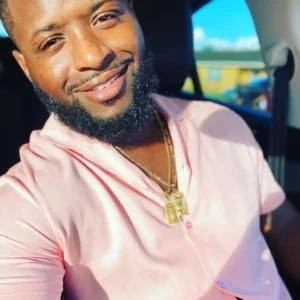
 Former NFL cornerback Alphonso Smith Jr. spent years playing a position that demanded toughness, discipline and the ability to recover quickly when things went wrong.
But away from the football field, Smith was apparently fighting something far heavier.
Smith, a former Wake Forest standout who went on to play for the Denver Broncos and Detroit Lions, died by suicide on September 2, 2026, at the age of 40. Authorities in Florida confirmed his death after deputies responded to a reported suicide attempt in Pahokee.
And while his football accomplishments are part of his story, the words Smith reportedly shared shortly before his death are forcing another conversation—one that needs our full attention.
Black men are hurting. And far too many of them are still being expected to hurt quietly.
According to reports, Smith posted a deeply emotional message on Facebook shortly before his death. He apologized to people he believed he had hurt, spoke about painful experiences from his childhood and described struggling internally. Among the most heartbreaking words in the post were these:
“I needed help & did not get it!”
Sit with that.
Not the NFL career. Not the statistics. Not the image of an athlete once competing under stadium lights.
“I needed help.”
For Purposely Awakened, that is the part of this story we cannot scroll past.
When “Strong” Becomes a Trap
Black men are told to be strong almost from the moment they are old enough to understand the word.
Be strong for your mother.
Be strong for your children.
Be strong for your woman.
Provide.
Protect.
Handle your business.
Don’t complain.
Don’t let anybody see you sweat.
And there is absolutely nothing wrong with strength.
The problem begins when we teach men that strength and vulnerability cannot exist in the same body.
Because sometimes the strongest sentence a man can say is:
“I am not okay.”
Sometimes strength looks like calling a therapist.
Sometimes strength looks like telling your brother, wife, girlfriend, friend or pastor that your thoughts are scaring you.
Sometimes strength looks like admitting that something that happened 20 years ago is still hurting you today.
And sometimes strength is allowing somebody else to help carry what you’ve been carrying alone.
Mental-health struggles do not disappear because someone has money, children, a successful career, a strong body, faith, popularity or a masculine image.
Pain does not check résumés.
We Have to Stop Assuming Someone Is Fine Because They Look Fine
One of the most sobering details surrounding Smith’s death came from footage reportedly posted only days earlier.
In it, Smith appeared upbeat while trying to buy breakfast for another family. He was joking, interacting with people and outwardly appearing to be in good spirits.
That matters.
Because we have developed an image in our minds of what depression is supposed to look like.
We expect sadness.
Isolation.
Tears.
A dark room.
But sometimes depression looks like somebody laughing.
Sometimes anxiety looks like somebody working overtime.
Sometimes trauma looks like the man who everybody calls when they need help.
Sometimes the person making everybody else smile goes home and fights thoughts nobody knows about.
That is why “He seemed fine” can never be our mental-health strategy.
Check on your people beyond the surface.
And when somebody starts talking differently—particularly when they mention hopelessness, feeling like a burden, death, saying goodbye or believing that everyone would be better without them—take them seriously.
Do not dismiss it as drama.
Do not tell them simply to “man up.”
Do not embarrass them for opening up.
Help them get help.
There Is a Treatment Gap, Too
The conversation becomes even more important when we look at mental-health care within the Black community.
According to the U.S. Department of Health and Human Services’ Office of Minority Health, Black adults were 36% less likely than U.S. adults overall to have received mental-health treatment in 2024. Only 14.7% of Black adults reported receiving mental-health treatment that year, compared with 22.9% of adults overall.
That doesn’t mean Black people don’t experience pain.
It means too many people are experiencing it without treatment.
There are many reasons that gap exists—access, cost, mistrust of medical systems, cultural stigma and the belief that certain struggles should remain private among them.
And for Black men specifically, another layer often enters the picture: masculinity.
Seeking help can still be unfairly viewed as weakness.
Therapy can be mocked.
Men can be told to pray harder, work harder, exercise more, drink something, smoke something, date somebody new or simply “get over it.”
But mental health is health.
We wouldn’t tell a man with a broken leg that asking a doctor for treatment makes him less masculine.
We shouldn’t treat depression, trauma, anxiety or suicidal thoughts differently.
And yes, prayer can be powerful. Faith can provide extraordinary comfort, community and hope.
But faith and professional mental-health care do not have to compete.
You can pray and go to therapy.
You can have a pastor and a licensed counselor.
You can trust God and take medication prescribed by a qualified medical professional when appropriate.
One does not cancel out the other.
Black Boys Need This Conversation Early
We cannot wait until Black boys become grown men in crisis to teach them how to process emotions.
That lesson needs to begin much earlier.
The federal data should get our attention. In 2023, Black male high-school students reported attempting suicide at a higher rate than male high-school students nationally: 7.4% compared with 6.4%. And the suicide death rate among Black boys ages 15–19 was also slightly higher than the overall rate for boys in that age group.
Our boys need emotional vocabulary before adulthood.
Ask them more than:
“How was school?”
Ask:
What has been bothering you lately?
Is there anything you’re afraid to tell me?
Have you been feeling overwhelmed?
Do you feel like you have someone you can talk to?
Is something happening that you don’t know how to handle?
And then—we have to be prepared to hear the answer without immediately judging them.
Because if a boy learns at 12 that sadness gets mocked, he may become a 32-year-old man who has perfected saying, “I’m good.”
Even when he isn’t.
Trauma Does Not Disappear Because You Become Successful
Reports about Smith’s final message indicate that he referenced abuse he said he experienced as a child.
Without attempting to diagnose Smith or reduce the complexities of his life to one experience, his disclosure highlights something else our community needs to discuss more openly:
Black boys can be victims, too.
Men can carry childhood trauma.
Men can be sexually abused.
Men can experience domestic violence.
Men can experience depression.
Men can struggle with shame.
Men can have PTSD.
And some men have been carrying those experiences for decades because nobody ever gave them permission to identify what happened as trauma.
We have to stop treating male pain as automatically less painful because the person experiencing it happens to be a man.
Trauma left untreated doesn’t always remain neatly stored in the past.
It can show up in relationships.
Anger.
Substance use.
Isolation.
Self-worth.
Parenting.
Decision-making.
And sometimes, devastatingly, in a person’s desire to continue living.
Healing requires more than pretending the wound doesn’t exist.
We Also Have to Make Room for Accountability and Healing
There is another uncomfortable piece of mental-health conversations that mature communities have to be able to hold.
Someone can have experienced trauma and still have hurt other people.
Both things can be true.
Trauma can help explain behavior without automatically excusing behavior.
Smith’s final message reportedly included both references to his own pain and apologies to people he believed he had harmed.
That distinction matters because healing cannot simply mean protecting someone from accountability.
Real healing can include acknowledging harm, receiving appropriate treatment, making amends when possible, establishing boundaries and interrupting cycles before pain gets passed to another generation.
The goal isn’t merely surviving trauma.
The goal is refusing to let trauma continue writing everybody else’s story, too.
Our Men Cannot Only Be Valuable When They’re Providing Something
There’s another conversation Black families and communities should have.
Do the men in our lives know that they are loved even when they aren’t producing?
Even when the job disappears?
Even when the money isn’t flowing?
Even when the business fails?
Even when they’re struggling mentally?
Even when they’re exhausted?
Even when they don’t have an answer?
We celebrate Black men when they’re winning—and we should.
But they need to know they are still worthy of love when life gets messy.
A man’s humanity cannot begin and end with his ability to provide.
He is somebody’s son before he is somebody’s paycheck.
He is a human being before he is an employee.
He deserves care before he reaches a breaking point.
Ask the Second Question
So here’s something practical we can all do.
The next time you ask a Black man in your life:
“You good?”
And he quickly says:
“Yeah, I’m straight.”
Ask one more question.
“No, seriously. How are you doing mentally?”
Then give him enough silence to answer.
We may not always know when someone is struggling. We cannot hold families responsible for somehow predicting every tragedy, and suicide is complex.
But we can create communities where asking for help becomes normal.
We can raise boys differently.
We can encourage therapy.
We can listen without immediately trying to fix everything.
We can learn warning signs.
We can stop joking about men’s mental health.
And when someone tells us they need help, we can believe them.
Alphonso Smith Jr. Was More Than a Football Player
Smith was a standout at Wake Forest, where he became one of college football’s premier defensive backs. He later became a second-round selection in the 2009 NFL Draft, going 37th overall to the Denver Broncos before eventually playing for the Detroit Lions. Across 42 NFL games, he recorded 88 tackles and eight interceptions. He was later inducted into Wake Forest’s athletic hall of fame.
Those accomplishments deserve recognition.
But his life was worth more than interceptions, tackles and draft positions.
And that’s perhaps the larger message here.
Black men, your value is not measured solely by what you accomplish.
You don’t have to earn the right to be cared for.
You don’t have to become successful enough to deserve rest.
You don’t have to pretend you’re okay to protect everybody else’s perception of you.
And you do not have to fight everything alone.
If you’re struggling, please say something.
Tell somebody.
And if the first person doesn’t listen, tell somebody else.
Keep telling people until somebody helps you reach the support you need.
Because needing help is not weakness.
Staying alive long enough to receive it matters more than maintaining the appearance that you never needed it in the first place.
Rest peacefully, Alphonso Smith Jr.
And may this tragedy push all of us to listen a little closer when a Black man finally says:
“I need help.”
Mental Health Support: If you or someone you know is experiencing suicidal thoughts or a mental-health crisis in the United States, call or text 988 to reach the 988 Suicide & Crisis Lifeline. The CDC reports that nearly 48,824 Americans died by suicide in 2024, while millions more seriously considered, planned or attempted suicide.